







Shares of Tesla fell sharply in early Tuesday trading as escalating Middle East tensions pressured global markets.
The Tesla stock was down around 4% at $386.40 in early trading.
The S&P 500 and Dow Jones Industrial Average were both lower by roughly 2%, reflecting broad risk-off sentiment.
Brent crude futures climbed 6.2% to $80.87, reviving inflation concerns.
The 10-year US Treasury yield rose to 4.1%, up from 3.9% at the end of last week.
Higher oil prices and rising yields created a challenging backdrop for growth stocks, including Tesla.
Buy Tesla stock instantly on eToro now.
Optimus update in focus
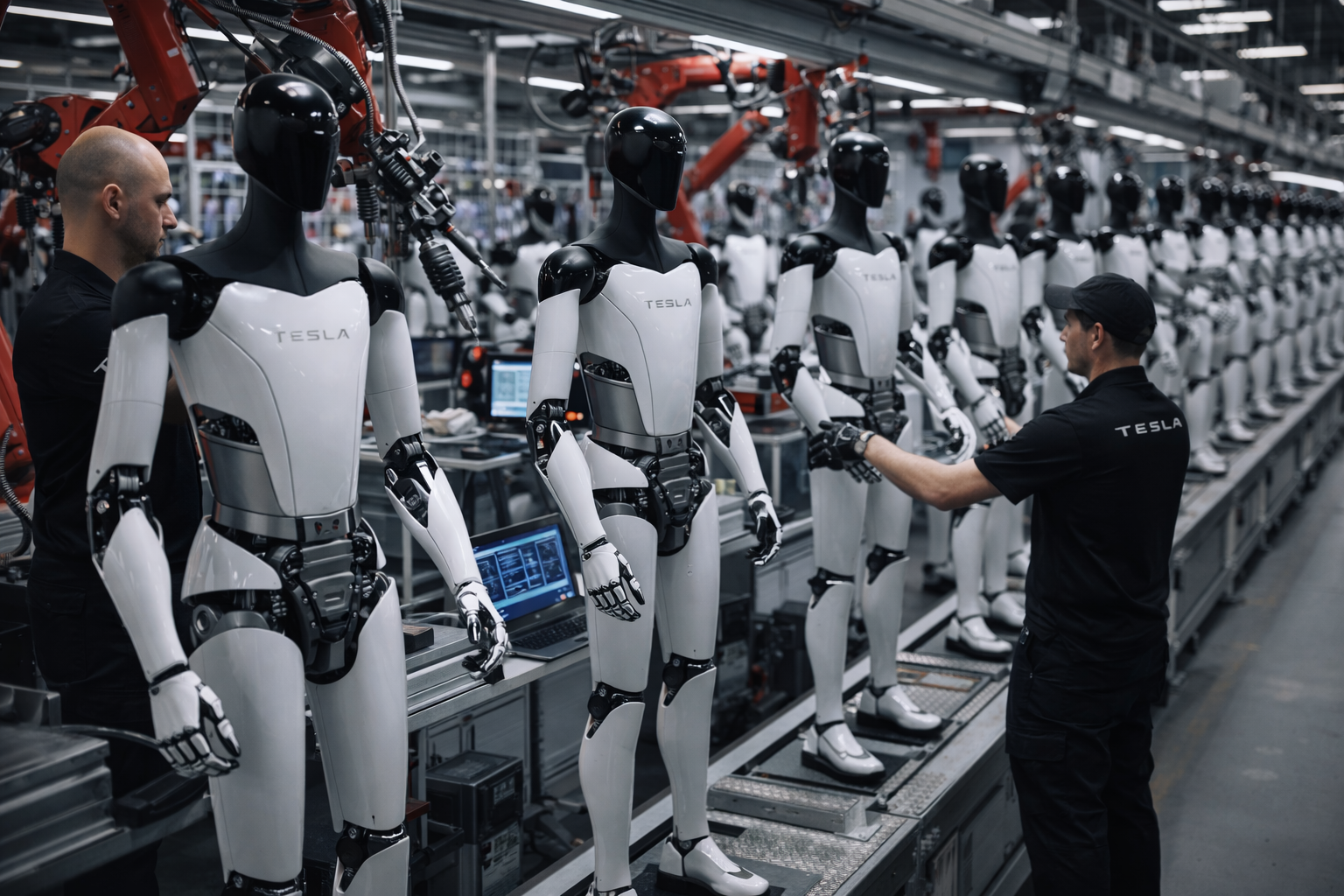
Absent geopolitical concerns, investor attention would likely be centred on Tesla’s promised first-quarter 2026 reveal of the third generation of its humanoid robot, Optimus.
Morgan Stanley analyst Adam Jonas wrote in a recent report that the forthcoming update could mark a significant shift from prior versions.
“Given that it would be over two years since the last major, full-body Optimus update, and the numerous pivots the company has made….we would not be surprised if Gen 3 is a substantial departure from the current version,” Jonas wrote.
“Recent comments from Elon Musk would lead us to believe the Gen 3 update will specifically emphasise dexterity….and manufacturability….don’t be surprised if Optimus is simpler than you’d expect.”
Morgan Stanley expects Tesla to deploy Optimus 3.0 initially within its own factories, allowing the company to gather operational data and refine the product.
Tesla has said it plans to convert Model S and Model X production capacity at its Fremont, California plant to support robot manufacturing, underscoring its strategic push into what it describes as “physical AI” — artificial intelligence systems that interact with the real world.
Europe shows signs of stabilisation
Recent data suggest some stabilisation in key European markets.
In February, Tesla gained market share in several countries.
Registrations, a proxy for sales, rose 55% in France compared with a year earlier, even as many rivals reported declines.
Registrations more than doubled in Portugal and increased 74% in Spain, 32% in Norway and 14% in Belgium.
However, performance was uneven. Registrations fell 45% in the Netherlands, 18% in Denmark and 7% in Italy.
The United Kingdom and Germany, Europe’s largest car markets, are expected to release data later in the week.
Tesla’s European sales declined 27% last year amid rising competition from Chinese electric vehicle brands, controversy surrounding CEO Elon Musk’s political involvement and an ageing model lineup.
In response, Tesla introduced lower-priced versions of its Model Y and Model 3 in the US and Europe, which began reaching consumers late last year.
The company’s market share across the European Union, Britain and the European Free Trade Association slipped slightly to 0.8% in January from 1% in the same month a year earlier.
Robotaxi rollout progress questioned
Tesla’s autonomy efforts remain a key focus for investors.
In January, Musk said that Austin robotaxis had begun operating without safety monitors in the front seats, sparking a rally in Tesla shares.
At the time, observers estimated that only two of roughly 45 vehicles were operating without monitors, though Tesla indicated the proportion would rise.
“We, obviously, are being very cautious about this because we want to have no injuries or serious accidents along the way,” Musk said during the company’s fourth-quarter earnings call.
“But you’ll see the amount of autonomy increase dramatically, I think, every month essentially.”
More than a month later, that increase has not yet materialised.
A recent report from Jefferies found that only two of 15 Austin robotaxi rides taken by its analysts were without a safety driver.
The firm also noted that while Tesla’s robotaxis were cheaper than comparable services from Waymo and Uber in the same area, wait times and trip durations were longer.
The post Why Tesla stock is crashing over 4% on Tuesday appeared first on Invezz


